Not long ago someone asked me a fair question: "So you guys only know alcohol, right?"
I get why they'd think that. A lot of our work over the past decade has been for beverage alcohol brands, most of it for Diageo, and from the outside an alcohol brand site looks like any other brand site. You've got good photography, product pages, a store locator and a cocktail recipe or two.
Building one is a different job. Alcohol is one of the hardest categories to build websites for, and the reasons it's hard are what make the experience useful for everyone else.
What alcohol makes you solve
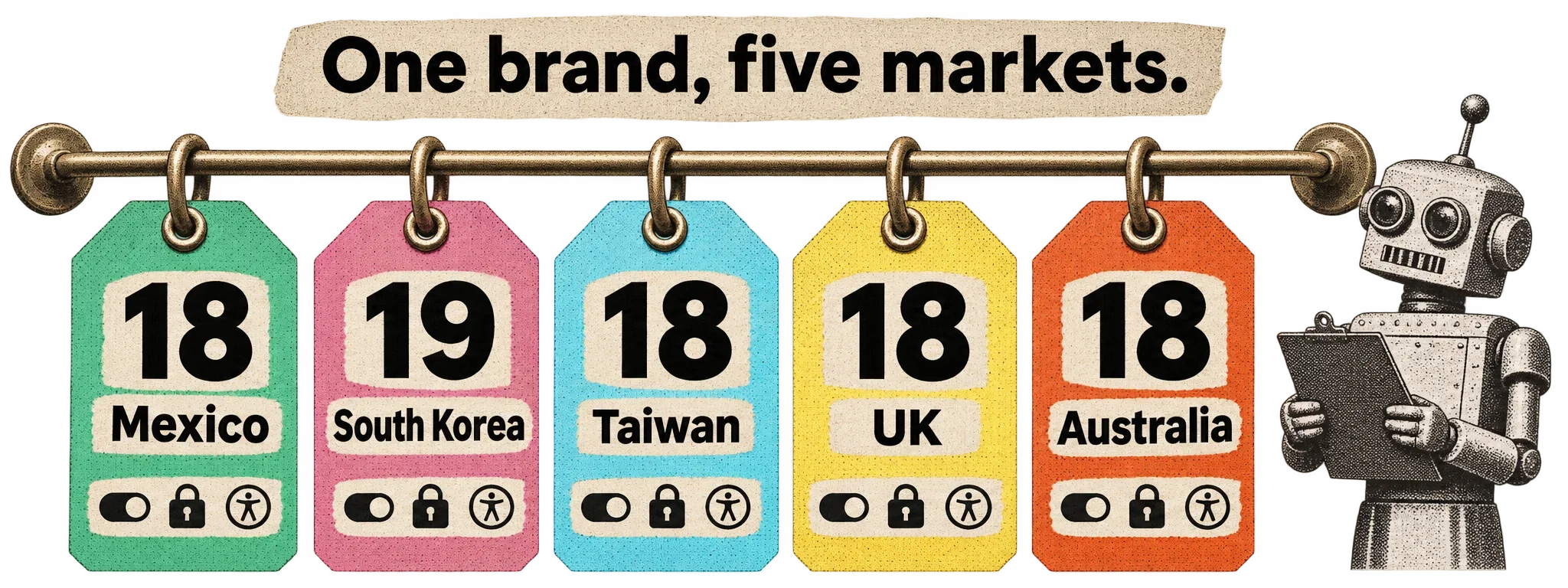
Start with the age gate. It has to work out which legal age applies: 21 in the US, 19 in South Korea, and 18 in Mexico, Taiwan, the UK and Australia. It also has to cover every way into the site, including the product pages people reach straight from an ad or a social post.
The creative has rules too. Industry codes control who can appear in it, and in the US the spirits industry code requires models and actors to be at least 25. Responsible-drinking messaging has to show up in the right places, in the right language, every time.
Consent and data are another layer. Cookie rules change from market to market, and in the UK, advertising and most other non-essential cookies can't fire until someone opts in. Where personal data can be stored, and what you have to tell people about it, changes again. Accessibility sits on top of all of that in every market.
None of this can wait until sign-off at the end. If you get it wrong, legal stops the launch, or worse, it gets through and goes live.
What that looks like across five markets
When we rolled Don Julio out to Mexico, Korea, Taiwan, the UK and Australia, translating the content was the easy part. Each market needed its own age rules, consent setup, data and accessibility requirements and approvals, and all of it had to run on one platform that still felt like Don Julio everywhere.
Guinness went into similar markets, and this time we didn't want to repeat the work from scratch. We wrote down the process: what has to be decided for each market, in what order and by whom, covering cookie preferences, data storage and accessibility. We kept refining it, and every brand after Guinness started from that playbook.
Launching in a new market next year? We'll map what each market needs with you before you build. Tell us where you're headed.
The biggest days of the year
Alcohol brands have predictable traffic peaks: Black Friday, the holidays, BBQ season and, for Guinness, St. Patrick's Day. On the old environment, those dates came with a question nobody liked asking, which was whether the site would hold up.
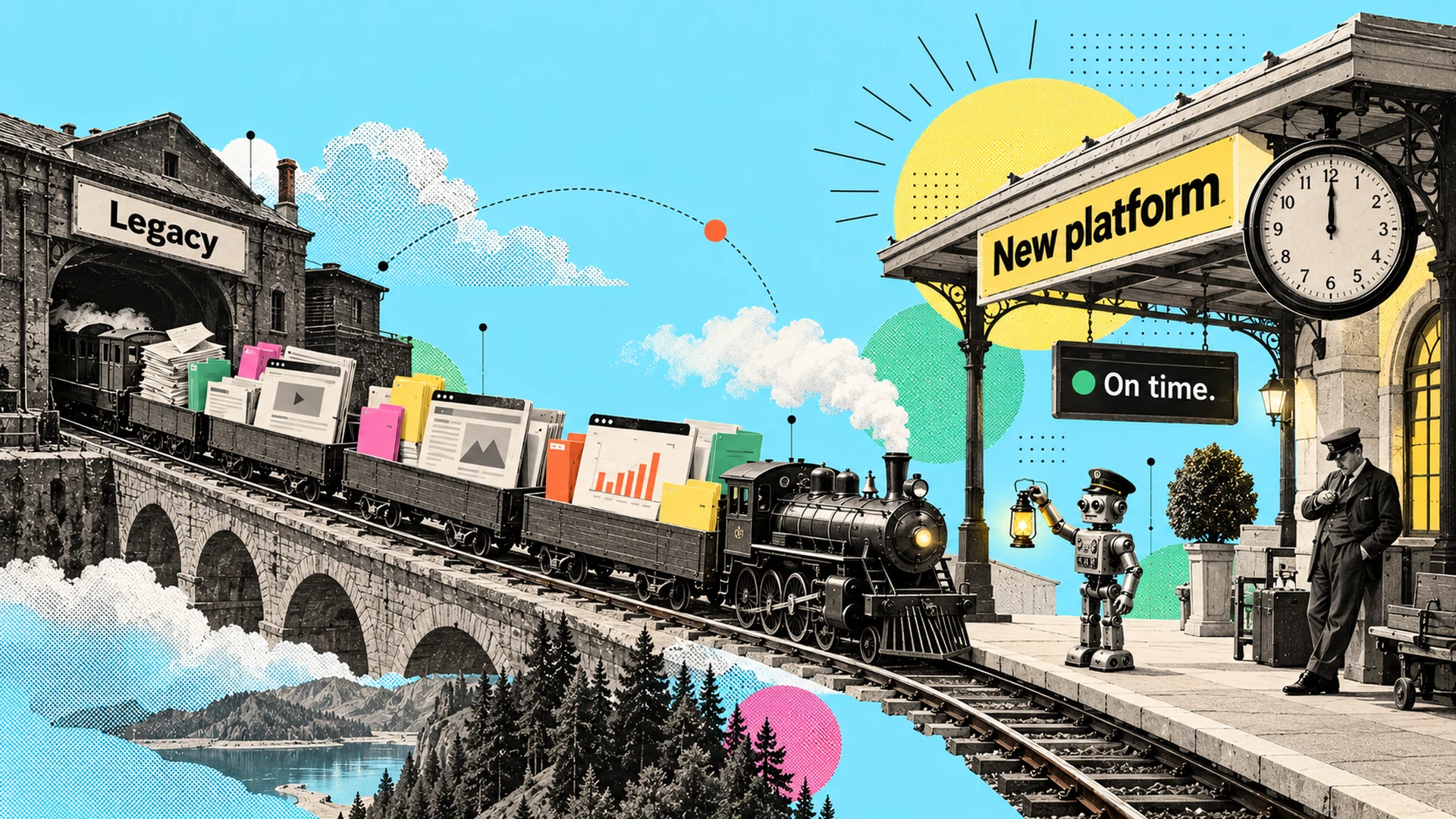
The new architecture runs on Vercel and scales automatically with demand, so nobody has to ask anymore. The team gets to spend St. Patrick's Day on the campaign instead of watching the servers.
So, do we only know alcohol?
What we know is regulated, multi-brand, multi-market consumer brands, and alcohol happens to be the hardest version of that. If you run a portfolio in health and personal care, food and beverage or financial services, you're dealing with the same problems under different labels: claims that need review market by market, consent and data rules that change at every border, lots of brands sharing one platform without looking the same, and launch dates that don't move.
Galaxy Digital is a good example. It's a financial services firm, and we've worked across six of its websites for more than four years. We implemented its cookie preferences and the analytics tagging that goes with them. The bigger advantage came from what alcohol had already taught us. Accessibility, security, compliance, performance, visibility in search and AI answers, shared infrastructure and a CMS the team could run were all part of the plan from the start.
Teams that build for alcohol learn to design these in from day one, because there's no other way to ship. That habit carries over to whatever you sell.
Expanding into new markets?
Thorium Digital is a digital agency that builds and runs websites for multi-brand and regulated businesses. If you're planning a rollout into new markets, we can help you work out what each market needs before you build, while changes are still cheap.