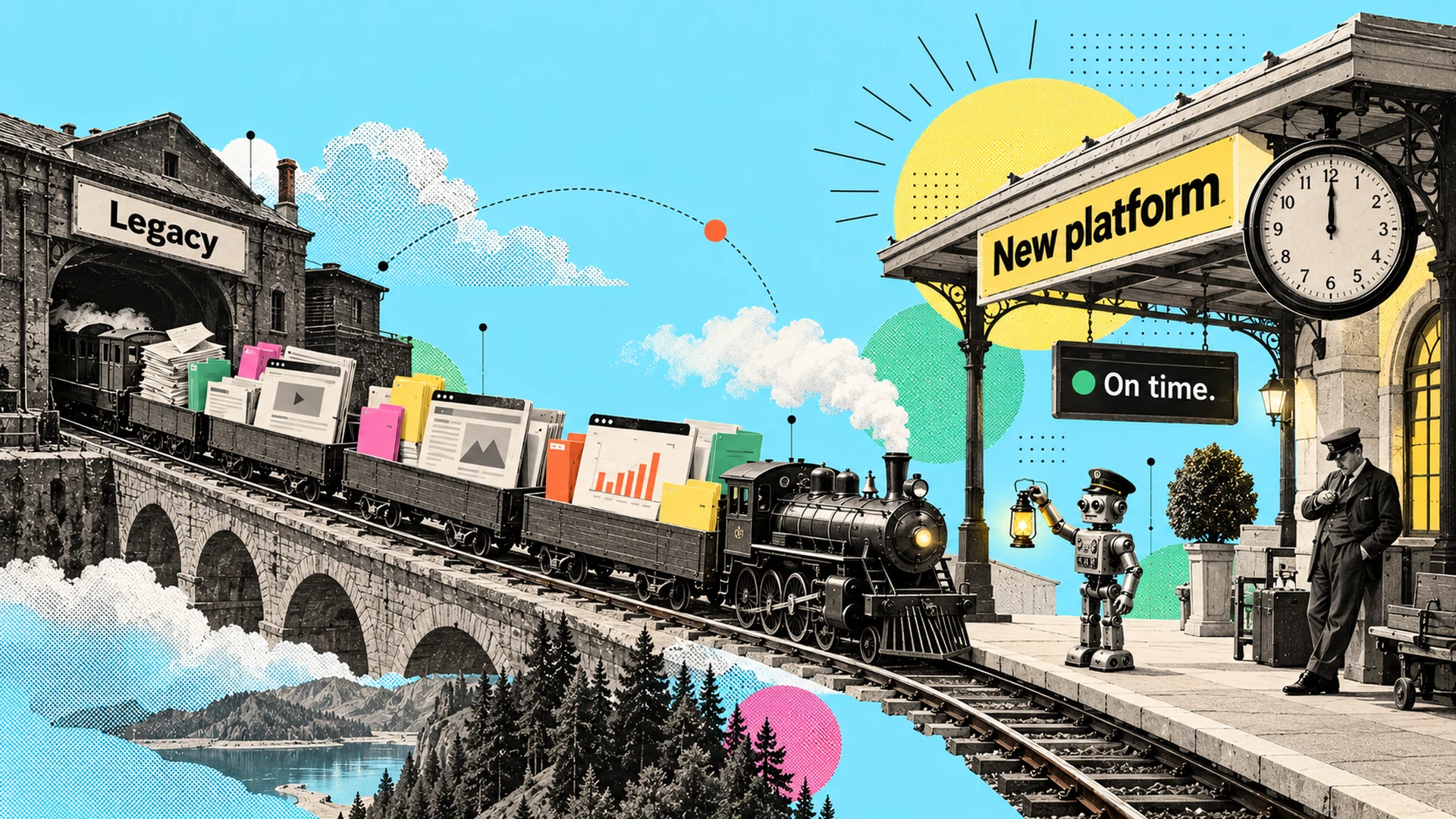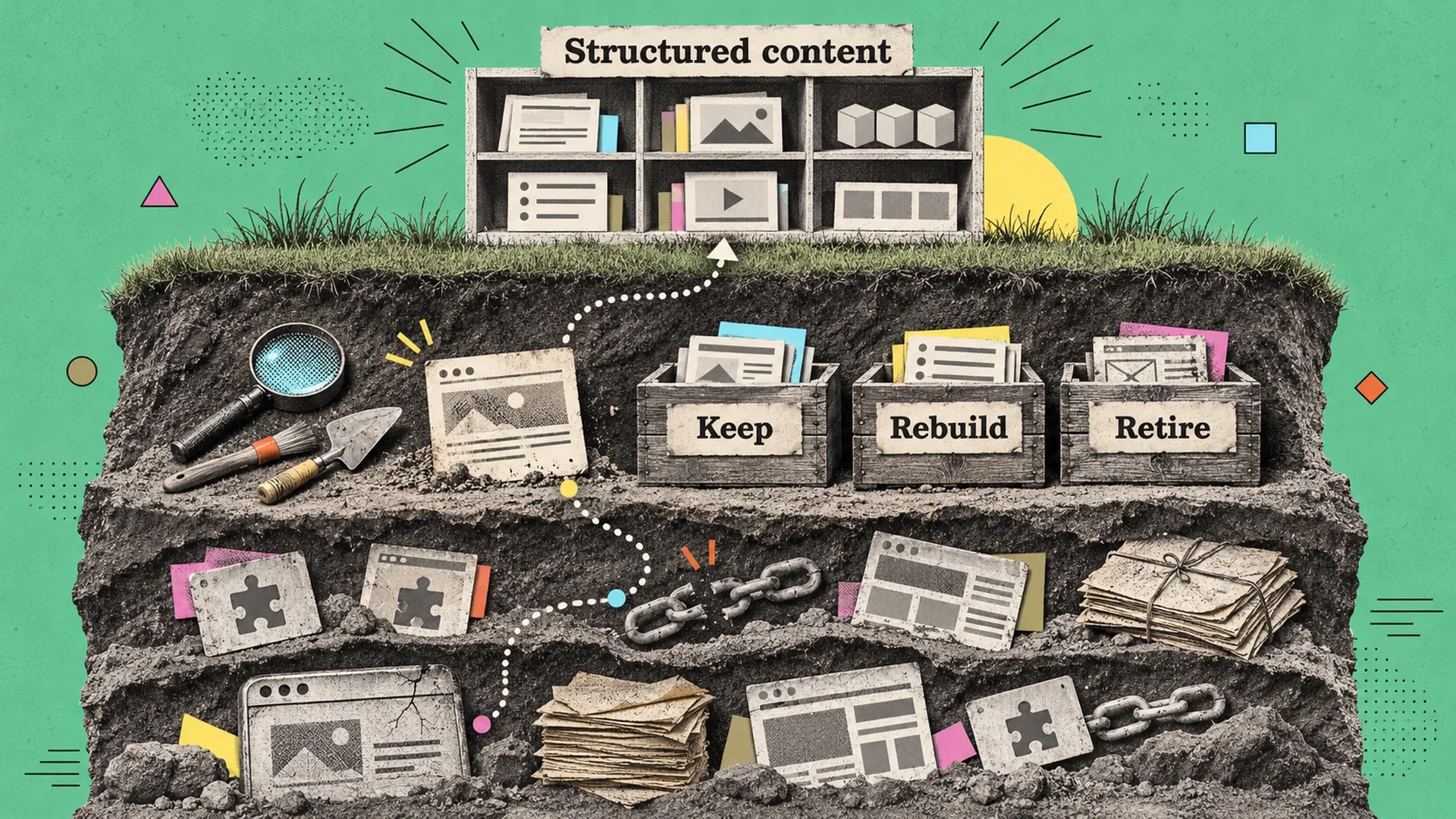
Every WordPress redesign eventually turns into content archaeology.
Someone opens the admin to plan the new site and finds years of posts, two or three page builders, plugins nobody remembers installing, and a regional team that's been pasting the same content into four places because there was never a better way.
None of that happened overnight. It built up one plugin and one workaround at a time. WordPress usually takes the blame, but mostly it's where a growing business's shortcuts ended up, and that's when the conversation about Contentful tends to start. Contentful is now part of Salesforce, but for a team moving off WordPress, the work below hasn't changed.
The wrong first question
The first question tends to be "should we move to Contentful?" I think the better one is "what are we trying to stop carrying forward?"
If you move without answering it, you get the same problems on a new platform. Routine changes still need a developer, content gets copied across sites and markets when it could be reused, nobody wants to touch the plugins and custom code, and there's still no clear owner for who creates, approves and publishes what.
What to sort out before you move a single page
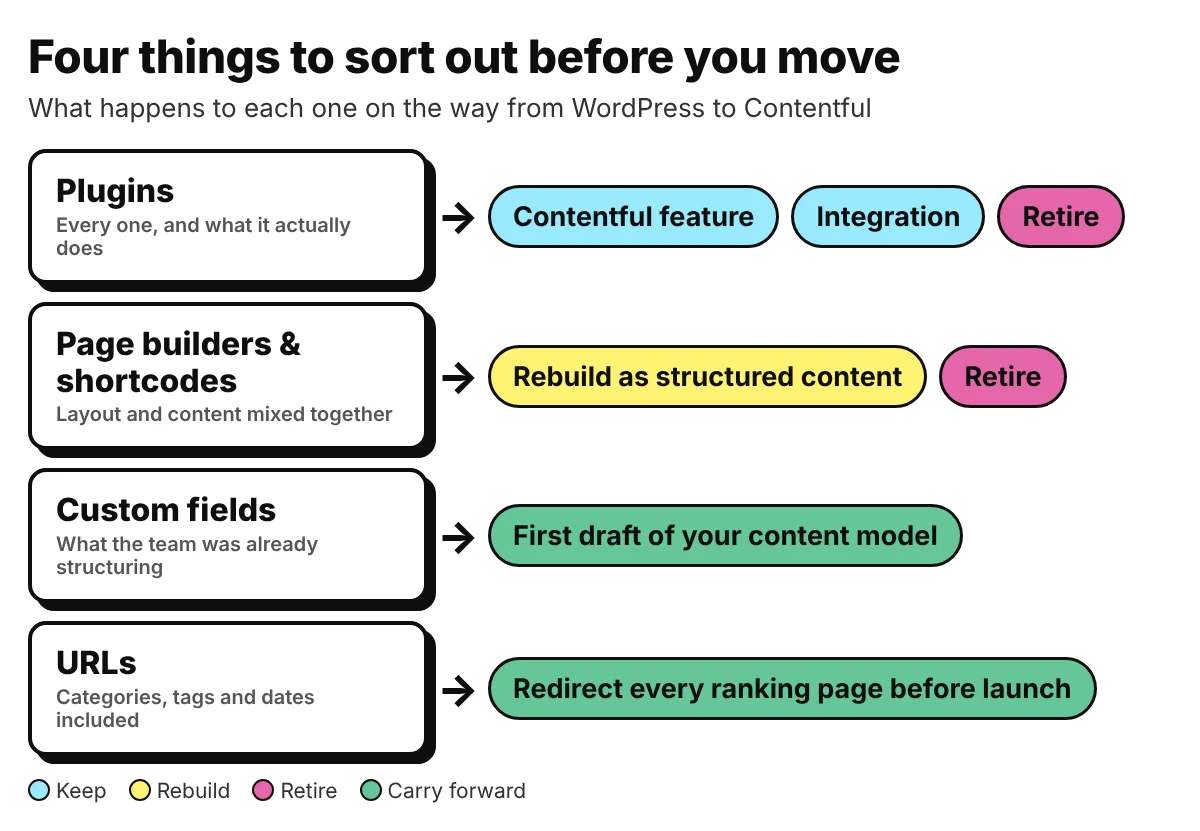
This is where WordPress moves differ from other CMS migrations. There are four things worth a hard look before anyone designs a content model.
The plugins. List every one and what it actually does. Some will become Contentful features, some will become integrations, and some will turn out to do nothing anyone still needs.
The page builders and shortcodes. Content built in a page builder, or full of shortcodes, has layout and content mixed together. It doesn't move cleanly because Contentful keeps the two apart, so decide early what gets rebuilt as structured content and what gets retired.
The custom fields. If you've been using custom fields, they're the rough draft of your Contentful content model, because they show you what the team has been trying to structure all along.
The URLs. Every page that ranks needs a redirect in place before launch. WordPress sites collect years of category, tag and date-based URLs that are easy to forget until traffic drops.
Once you know what you have, you can decide what moves, what gets reworked and what gets left behind, because not everything should make the trip.
Planning a move off WordPress? We'll audit your plugins, page builders, custom fields and URLs for free, in a day, so you know what's coming before you commit to anything. Tell us what you're running.
What it looked like in practice
Earlier this year we moved Altaris Capital, a private equity firm, from WordPress to Contentful. It looked like a platform move on paper, but most of the work turned out to be restructuring the content and how it got published.
On the old setup, updating the site after an acquisition meant waiting on a developer. Now the Altaris team adds a new acquisition in less than an hour and schedules the content to go live when they need it to. That's the change they notice from week to week.
What you should get out of it
We contributed a partner perspective to Contentful's downloadable guide on migrating from WordPress. The short version is that once it's done, your team should be able to launch faster with fewer people in the way, govern content with clear owners and standards, reuse content and components across pages, sites and markets, and add the next site without rebuilding.
If all the migration gives you is a new admin screen, you've paid for the move and kept the problems. We've written more about what makes a migration go well, whatever platform you're moving to.
Moving off WordPress?
Thorium Digital is a digital agency and Contentful partner. We help teams move to platforms like Contentful without bringing the old problems along. If you're weighing a move, we'll audit what you have for free, in a day, and show you what should come across. Tell us about your site.